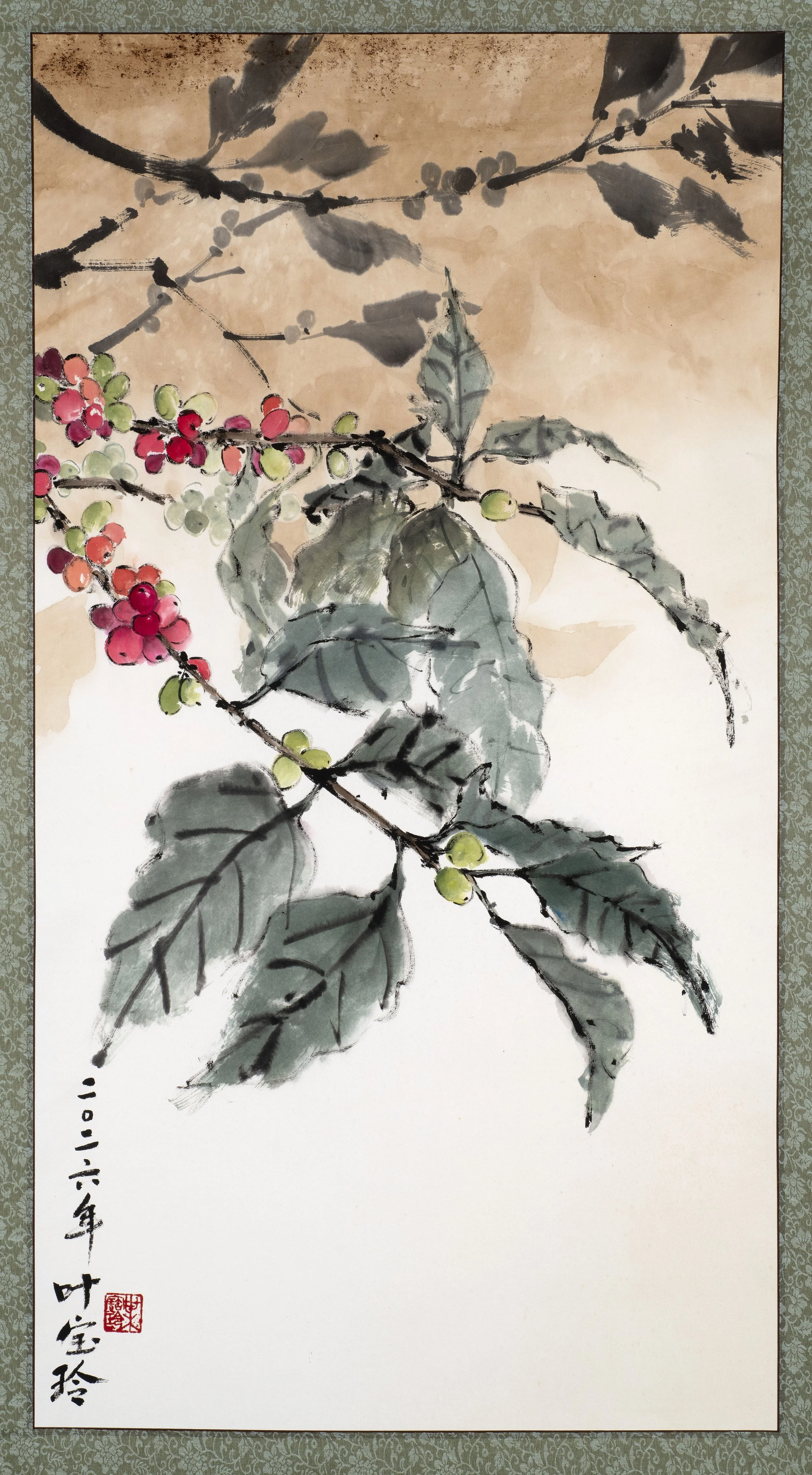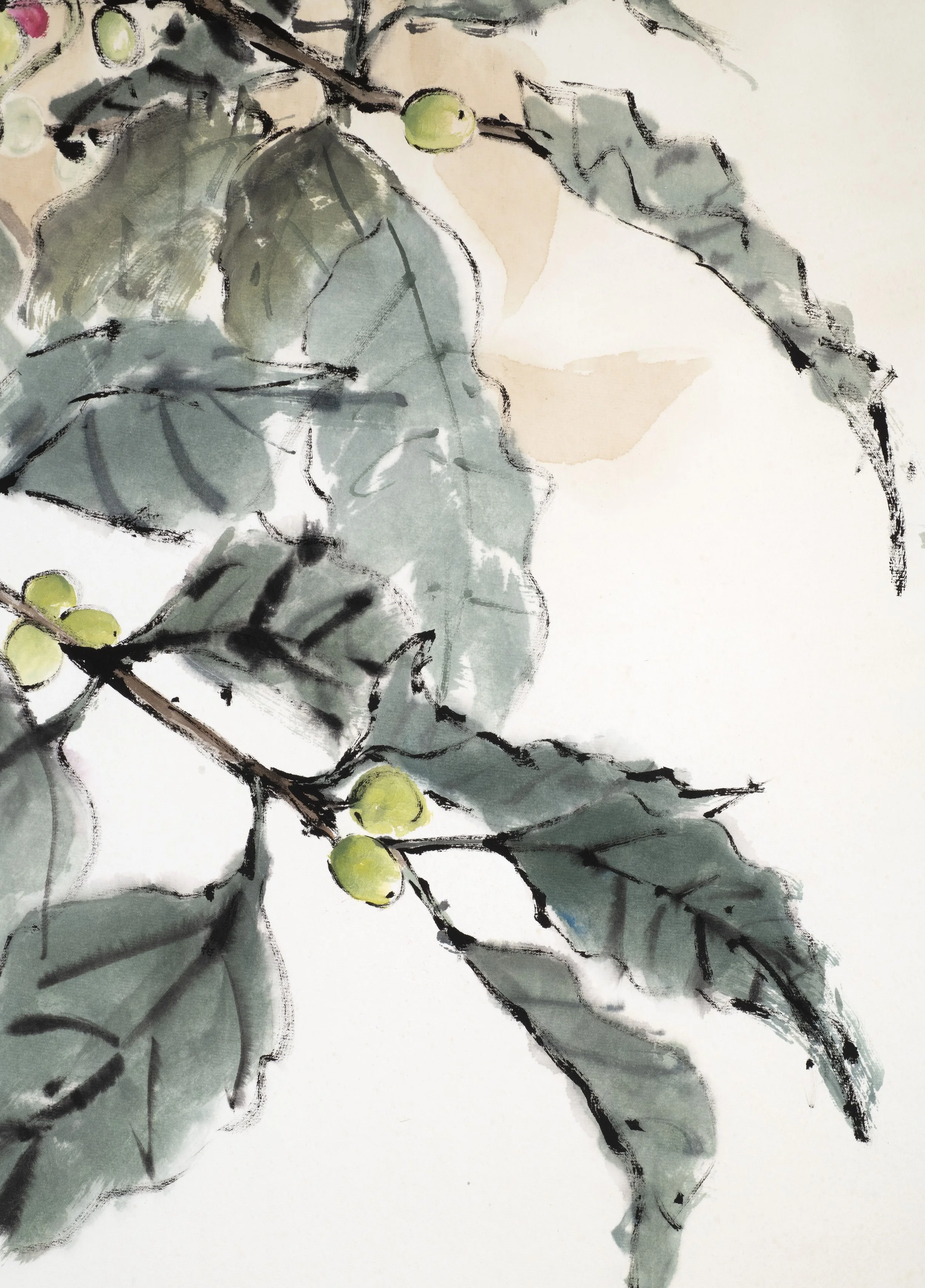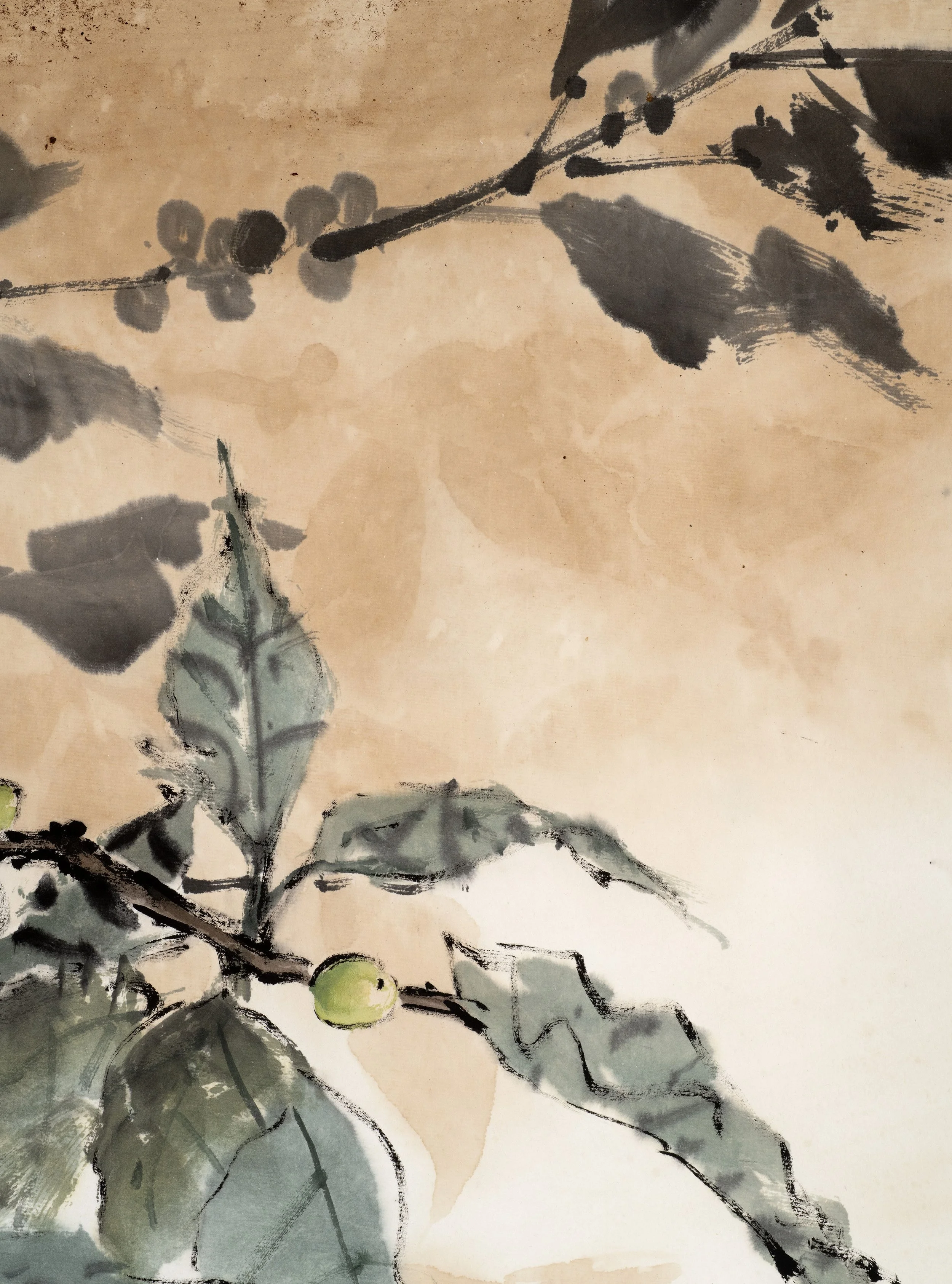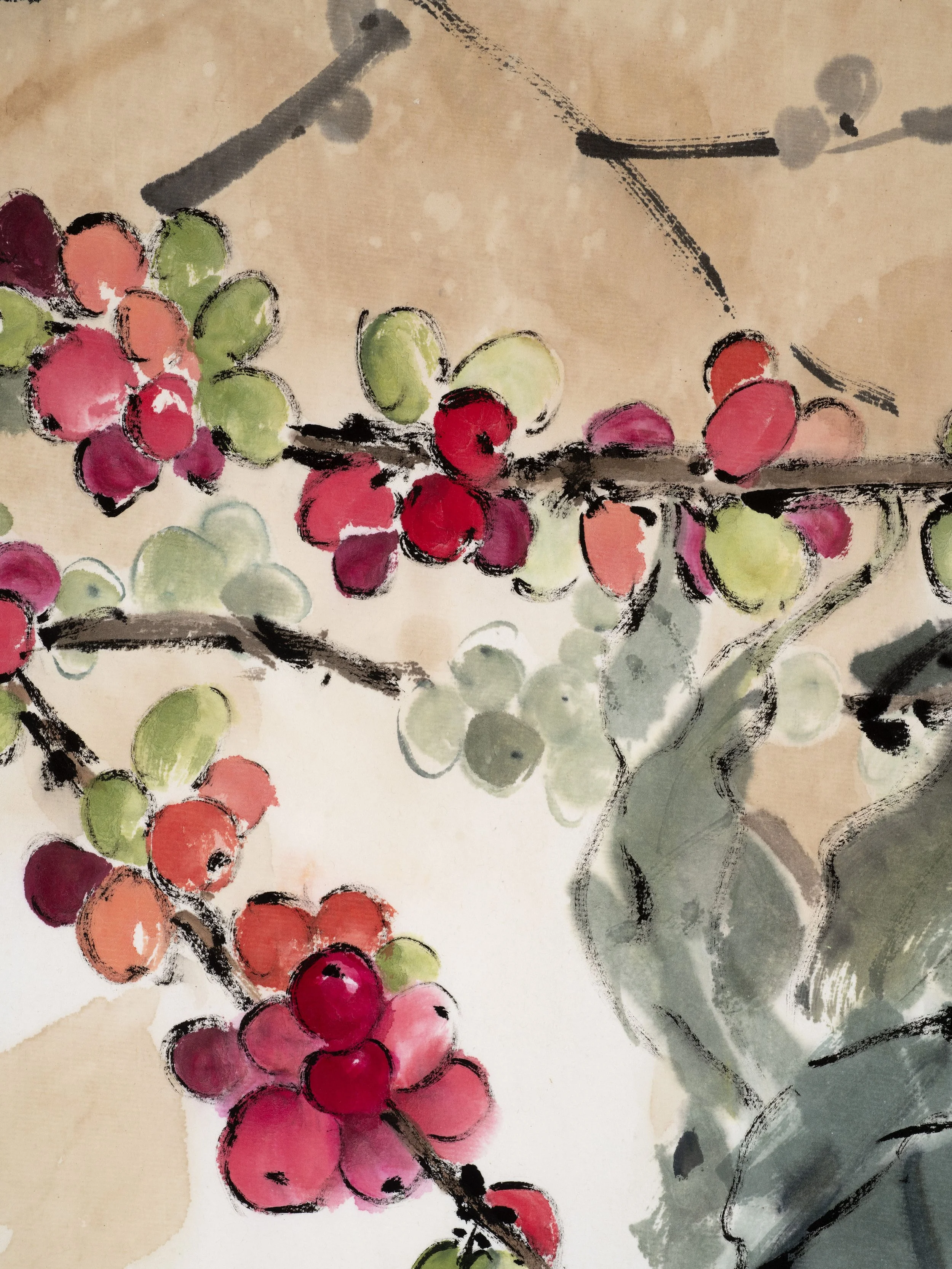
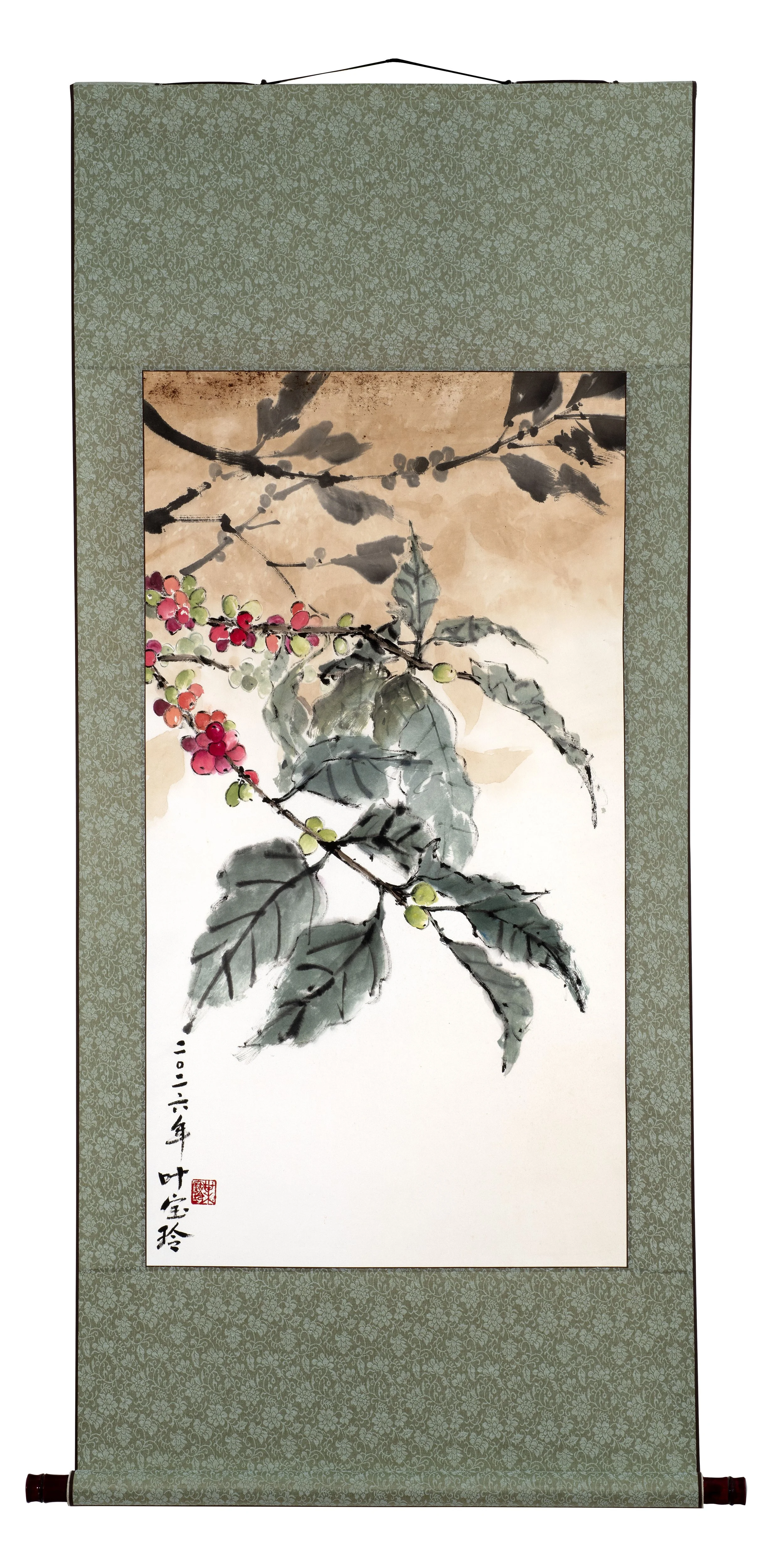
Chinese ink and coffee on rice paper, silk mounted
146cm x 61cm
Coffea arabica
£ 2,000
20% goes to Tropical Important Plant Areas (Kew)
Collection arranged after exhibition.
Plant family: Rubiaceae
Plant origin: Colombia (introduced)
Coffee used: Dāku Habu (Brazil, Colombia)
Coffea arabica L. is native only to the upland forests of Ethiopia and a small area of South Sudan. It arose from an ancient hybridisation between two other coffee species, including C. canephora, the source of robusta coffee, commonly used in instant blends.
Arabica is now widely cultivated across the tropics for high-grade coffee, which accounts for around 60% of the global coffee trade. It grows best as a shade crop and can be integrated into agroforestry systems that support wild forest diversity.
Wild arabica is listed as Endangered on the International Union for Conservation of Nature (IUCN) Red List, threatened by deforestation, pests, diseases, and climate change. Rising temperatures and drought are also affecting commercial production.
This is one of over 130 wild coffee species native to tropical Africa, Asia, and Australasia, many of which are threatened. Some have been used for coffee drinks, sometimes with untapped commercial potential.