Still Depth 静深
Whispers of the Wild
Dāku Khaw Gallery, 100 Kensington High St., London W8 4SG
13 March-13 June 2026
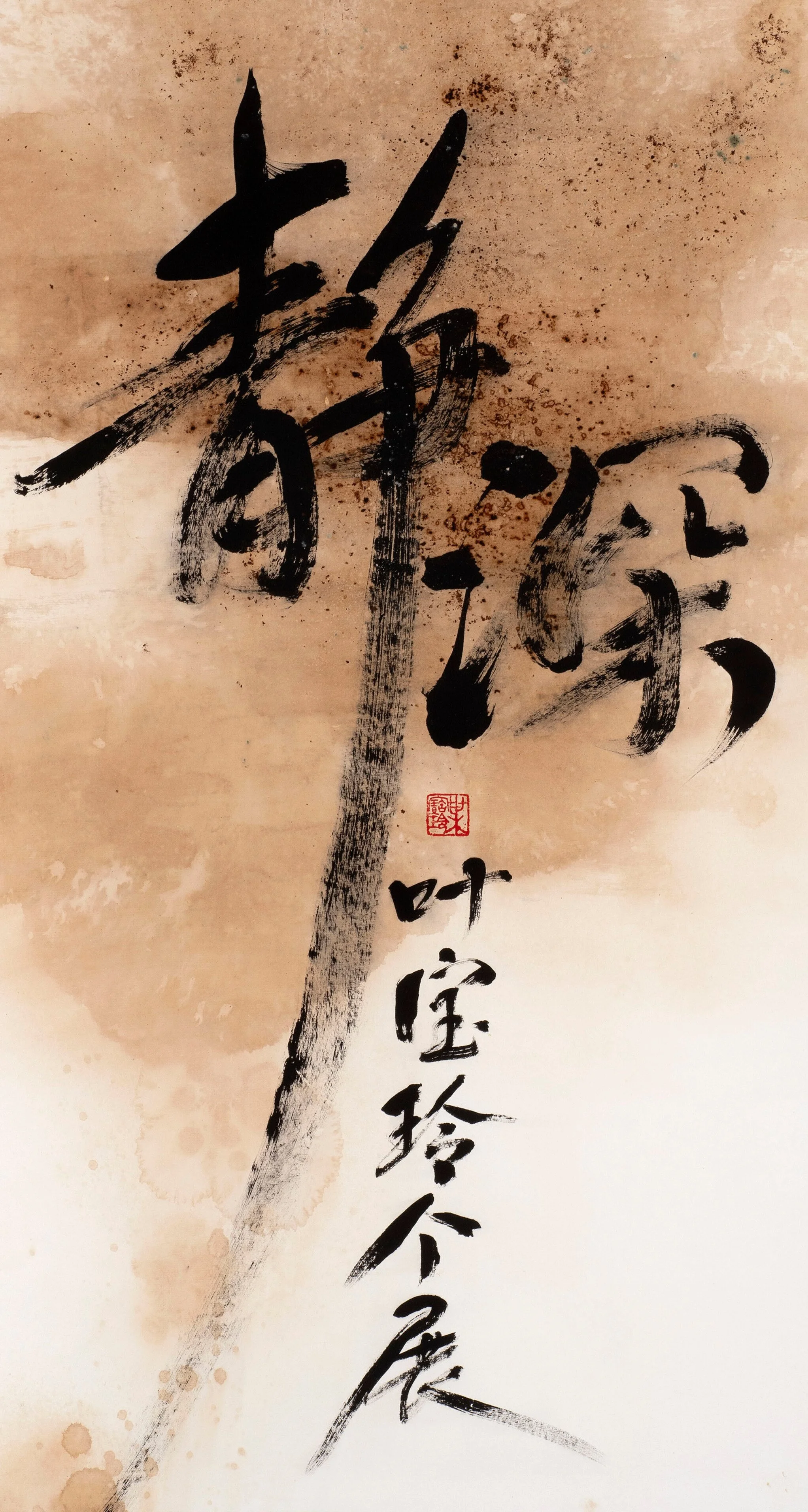
Solo exhibition curated by the artist, exploring the fragility of tropical plants and nature’s impermanence, in coffee and Chinese ink on rice paper.
20% of sales support Kew Garden’s Tropical Important Plant Areas (TIPAs) programme.
Opening Ceremony: 13 March 2026 | 5pm - 7pm
Workshop: 23 May 2026 | 1pm - 3pm (Book now on Eventbrite)
Exhibition Opening Hours:
Monday - Friday: 7:30am - 6pm
Saturday: 8am - 5:30pm
Sunday: 8:30am - 5pm
About the Paintings
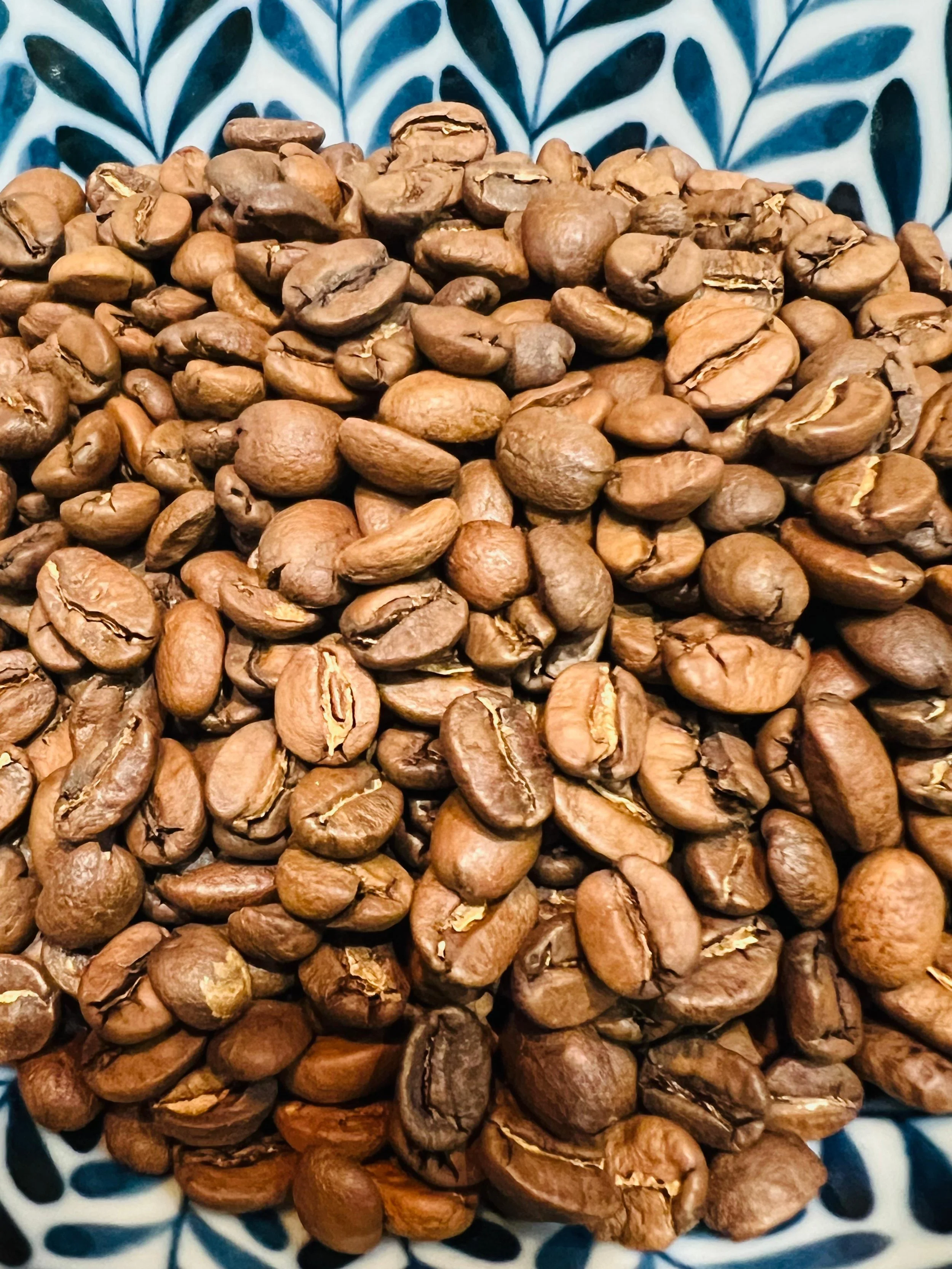
Dāku Hana coffee beans
-
Still Depth explores the fragility and impermanence of nature, celebrating the diversity of plant life while acknowledging its constant state of flux. Nature is both resilient and vulnerable – beautiful, yet capable of fading if uncared for.
-
The exhibition title draws inspiration from Dāku café-art gallery. Dāku — derived from the English “dark” and rendered in Japanese — carries a dual meaning: it refers both to the deep tonal richness of brewed Dāku coffee used as pigment in the paintings, and to the dense depth of tropical jungles that are home to the plants depicted in this series. Together, the works evoke a sense of stillness and equilibrium in nature, imagined without human destruction.
-
Tracing the origins of Dāku’s coffee beans – Brazil, Colombia, Costa Rica, and Mexico – the exhibition features eight paintings, each depicting a different plant family from one of these countries. For each painting, the artist used coffee brewed from beans sourced from the same country as the plants portrayed. Six plants are native or endemic, while two are naturalised, acknowledging both human impact and the potential for positive stewardship of plant diversity.
-
Given that coffee is an organic compound, unlike traditional pigments, a significant technical challenge arose in ensuring it could withstand the traditional wet mounting process.
Extensive experimentation was rigorously conducted by the artist to determine the precise chemical mixture to add to the brewed coffee: too much caused paper brittleness undesirable for wet mounting, while too little prevented sufficient binding and risked the coffee washing away during mounting. Resolving this challenge required patience, skill, and careful testing, and the solution became integral to the work itself.
The coffee stains in the paintings will fade over time, serving as a physical manifestation of the exhibition’s themes, embodying the transience of beauty and the fragility of the natural world
-
The paintings trace the journey of coffee beans: grown in their country of origin, shipped to London, roasted in Dāku, brewed, chemically treated, and painted onto rice paper mounted on silk scrolls, and they continue to transform on the paper over time.
The artist’s choice to work with traditional ink painting on rice paper reflects a parallel and personal quest into her cultural roots.
It also expresses a deep connection to her home country of Malaysia. The tropical plants depicted in the series recall the familiar landscapes of her childhood, grounding the work in memory and belonging.
Through this medium and subject matter, the exhibition becomes both an environmental reflection and an intimate meditation on home, identity, and continuity across geographies.
About the Charity Partner
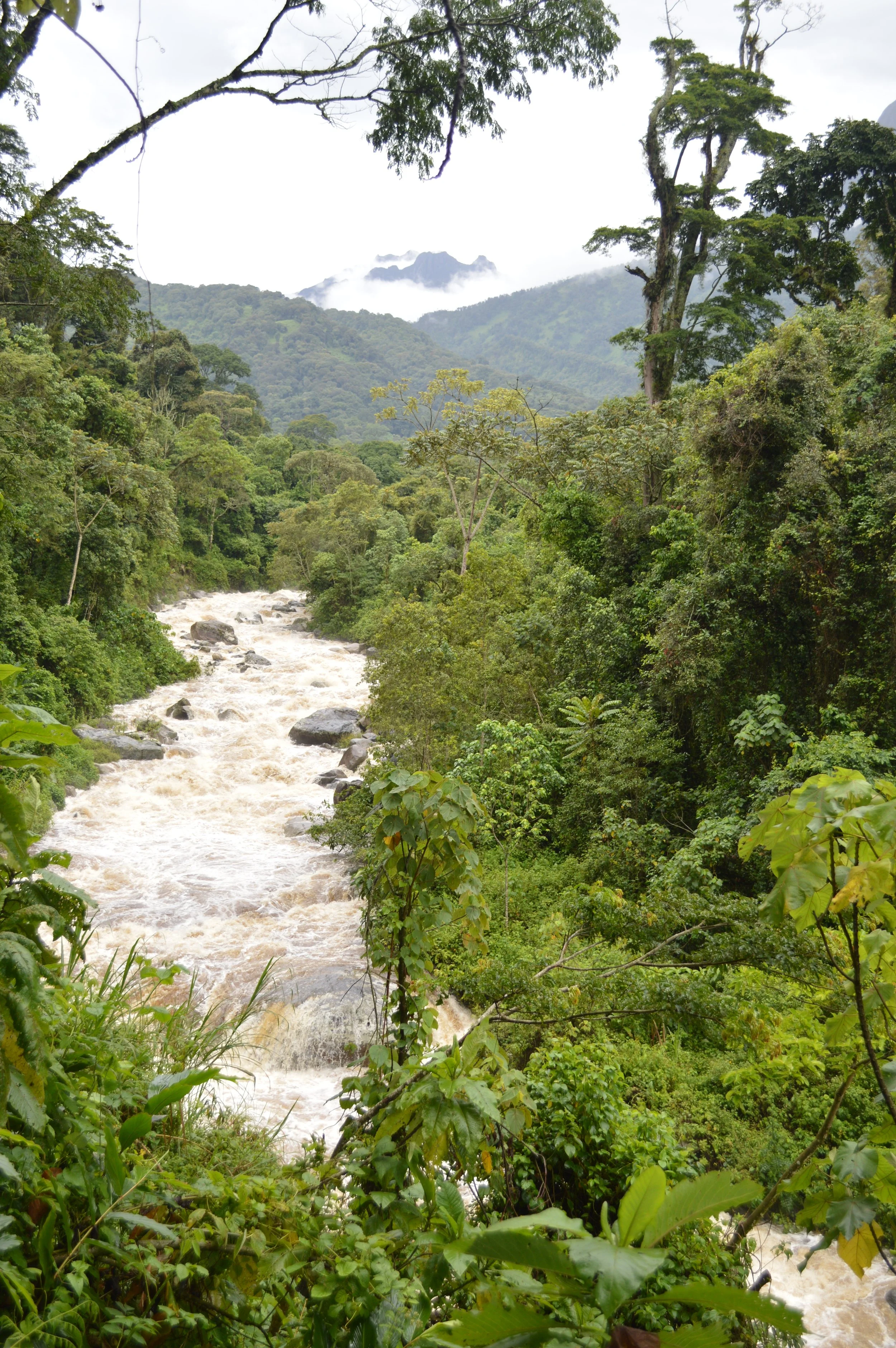
Montane forest landscape in the Rwenzori Mountains Important Plant Area of Uganda, one of the richest sites for endemic plant species in montane Africa. (Photo by I. Darbyshire)
-
20% of from paintings sold during the exhibition will be donated to Kew Gardens’ Tropical Important Plant Areas (TIPAs) programme, whose conservation mission closely aligns with the values explored in this exhibition.
These funds will help TIPAs deliver targeted conservation action in the regions most urgently in need of protection.
-
Plants are fundamental to life on land and provide countless benefits for human wellbeing. Yet up to 45% of plant species globally are threatened with extinction, and tropical plants—home to the greatest diversity—are often underrepresented in conservation programmes despite facing the most severe threats.
-
To address this challenge, the Royal Botanic Gardens, Kew works with partners and biodiversity stakeholders across the tropics to identify the most important sites for conserving global plant diversity, designating them as Important Plant Areas (IPAs).
-
After its first decade, the programme has identified over 340 Important Plant Areas (IPAs) across 13 tropical countries, providing vital information on these plant resources. Once identified, IPAs become the focus for conservation advocacy and action.
Notable achievements include:
Bolivia: 18 IPAs spurred conservation in Santa Cruz, establishing three protected areas; a national assessment now counts 87 IPAs.
Guinea: More than 90% of 22 IPAs identified from 2019 are now protected. Collaboration with local communities highlights biodiversity and backs community-led conservation.